


Scars
Treatment of scars in NYC is a complex process and is highly dependent on each scar’s unique characteristics. Many scars call for a combination of treatments. For scars that are large, highly visible, or deep, it is best to consult with a dermatologist at PFRANKMD to find out which treatment or combination of treatments is recommended.
What Are Scars?
A scar is a growth of tissue marking the spot where skin has healed after an injury. Scars are part of the natural healing process after an injury. Scars are categorized into various types depending on factors like their cause, location, depth, and size. The following types of scars can occur:
- Acne Scars
- Pitted Scars
- Burns
- Surgical Scars
- C-Section Scars
- Stretch Marks
- Wound Scars
- Keloid Scars
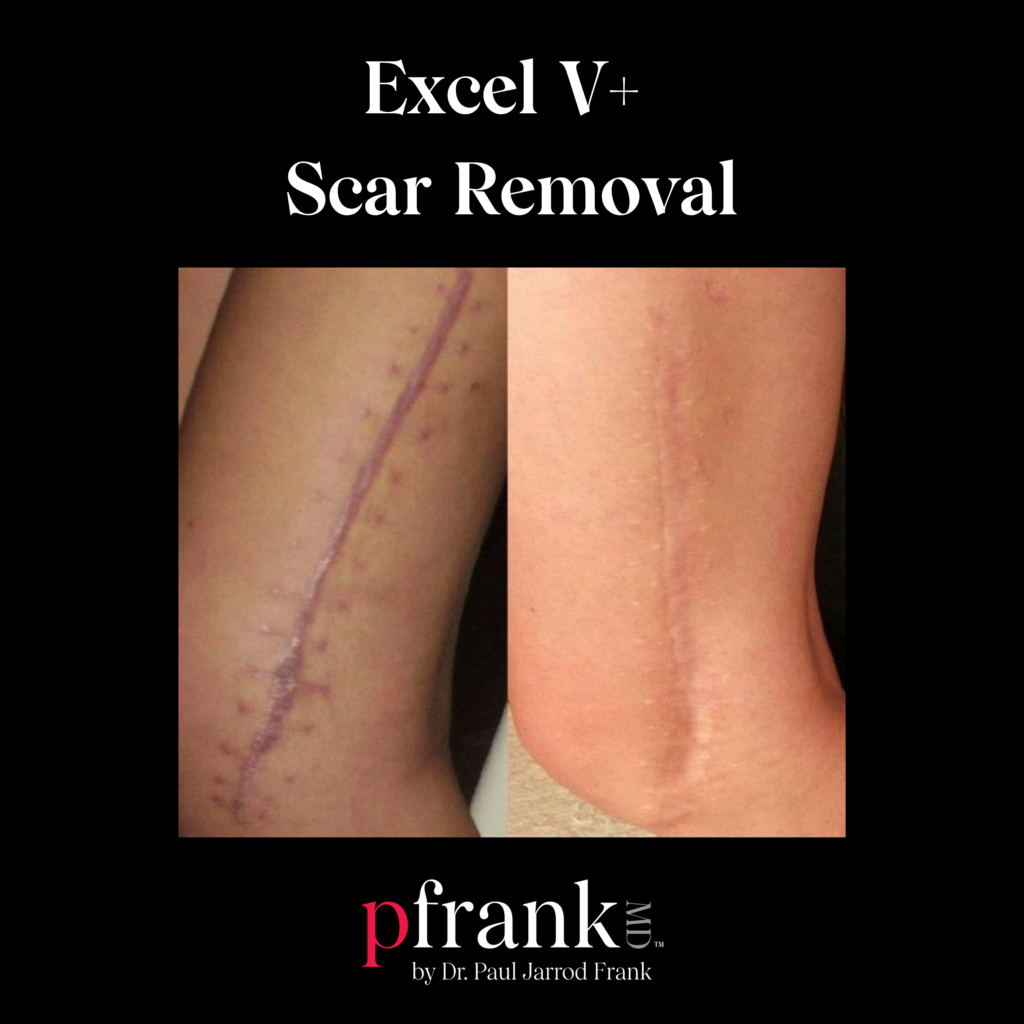
- Hypertrophic Scars
Acne scars may be pitted, wavelike, or angular, while hypertrophic scars appear raised and red. Keloid scars are also raised and extend beyond the injury, while contracture scars appear tight as if pulled together around the edges.
Laser Therapy for Scars
Our Scar Treatment Options
Scars can be treated and improved in a variety of ways. Sometimes, a combination of therapies can be used to treat scars. We perform the following treatments:
- Cortisone or Kenalog Treatments – Cortisone or Kenalog steroid injections can treat keloid scars and hypertrophic scars.
- Excimer UVB Laser – This phototherapy treatment is ideal for white scars.
- PICO Laser – PICO laser treatment uses laser energy to address hyperpigmented scars.
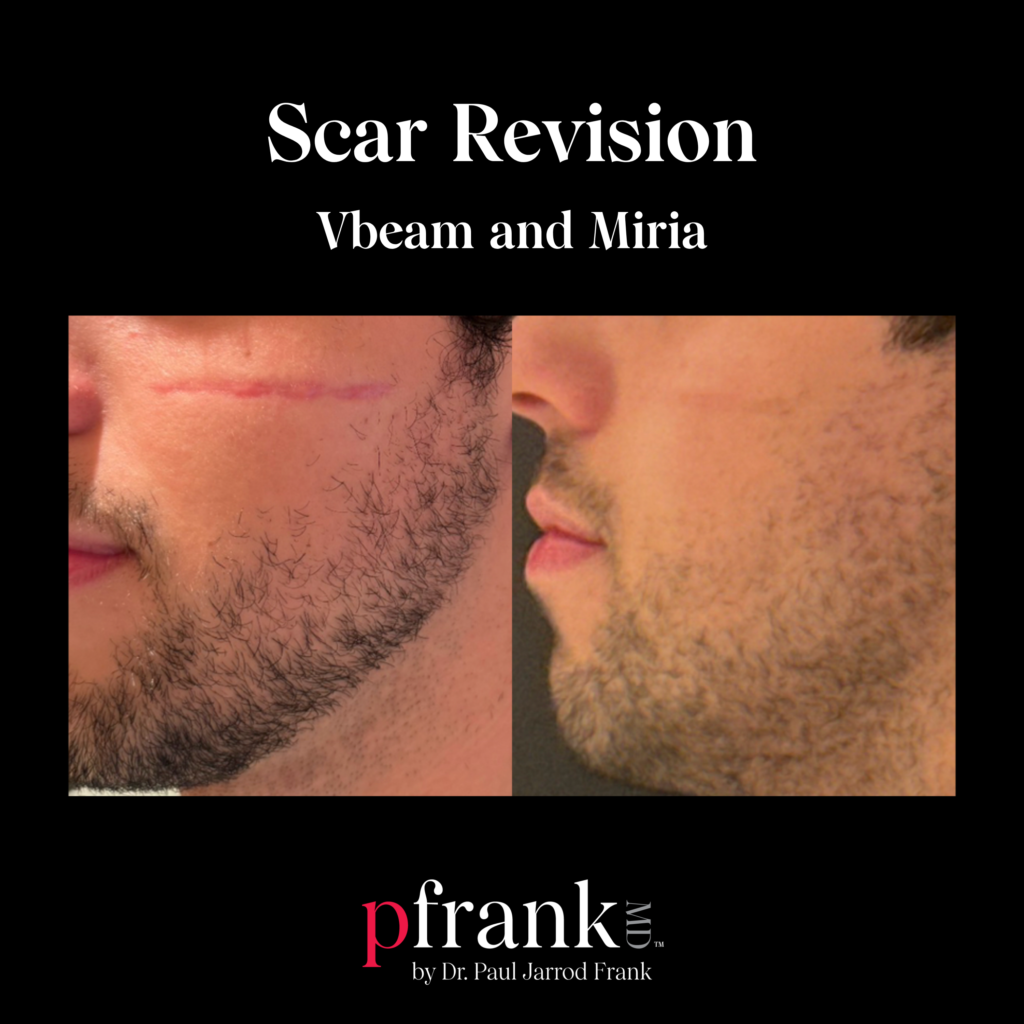
- Vbeam Laser Treatment – This pulsed-dye laser effectively treats red scars.
- Microdroplet Silicone – Injections of microdroplets of silicone can be used to fill in indented scars. This process also stimulates collagen production in the area.
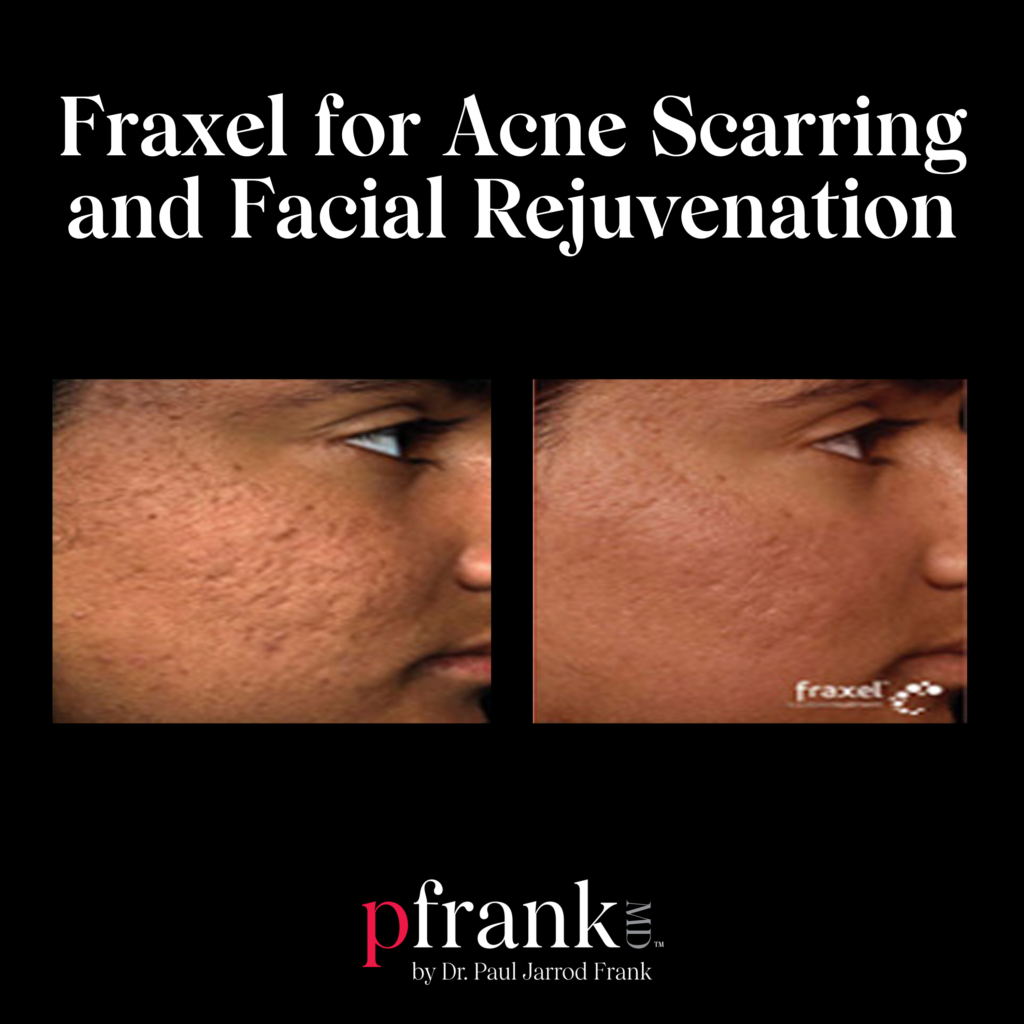
- Fraxel Repair – This ablative fractional laser treatment vaporizes scar tissue in hypertrophic scars and acne scars, stimulating the body’s natural healing process.
- Fraxel Restore – Fraxel Restore’s non-ablative fractional laser energy encourages new collagen production. This gradually and naturally fills in acne scars.
- Ellacor – Ellacor uses hollow needles to remove tissue sections from acne scars. As a result, the body’s healing process fills in these scars.
The type of treatment protocol, number of treatments, and length of treatment sessions required is determined by the severity of the scar and will be discussed during your scar teratment consultation.
Treating Acne Scars and Hyperpigmentation
Ideal Candidates for Scar Treatment
If you have scars that are situated in visible areas such as your hand or face, you may be a good candidate for scar treatment. If you have recently undergone surgery, you may be eligible for these techniques to prevent the development of keloid or hypertrophic scars. You may also be recommended for treatment if your scar limits your ability to move certain parts of your body.
Both surgical and nonsurgical scars should be treated sooner rather than later. The longer a scar stays red and inflamed, the worse it will look in the end. That’s why it’s essential to treat scars early.
After Your Scar Treatment
After your scar treatment, you likely won’t require any downtime or recovery time. Non-invasive and minimally invasive techniques allow for quicker healing than surgical treatments. Temporary swelling, redness, or bruising may be experienced. You will be given specific aftercare instructions depending on the chosen treatments.
Cost of Treatment for Scars
The cost of scar removal varies from one patient to another due to the personalized approach applied for each individual. The overall price may be impacted by the number and size of the scars being treated. The expenses will also reflect the complexity of the procedure and number of total sessions needed.
Your Scar Treatment Consultation
An examination of your scar or scars will be performed during your consultation. We will assess the type of the scar, as well as its depth and severity, and we will ask about its cause. A review of your medical history will be conducted; you will be asked about past surgeries, current medications, and existing conditions. Finally, a treatment plan will be developed using a combination of scar-revision treatments. To begin your scar treatment, schedule a consultation with PFRANKMD by Dr. Paul Jarrod Frank.